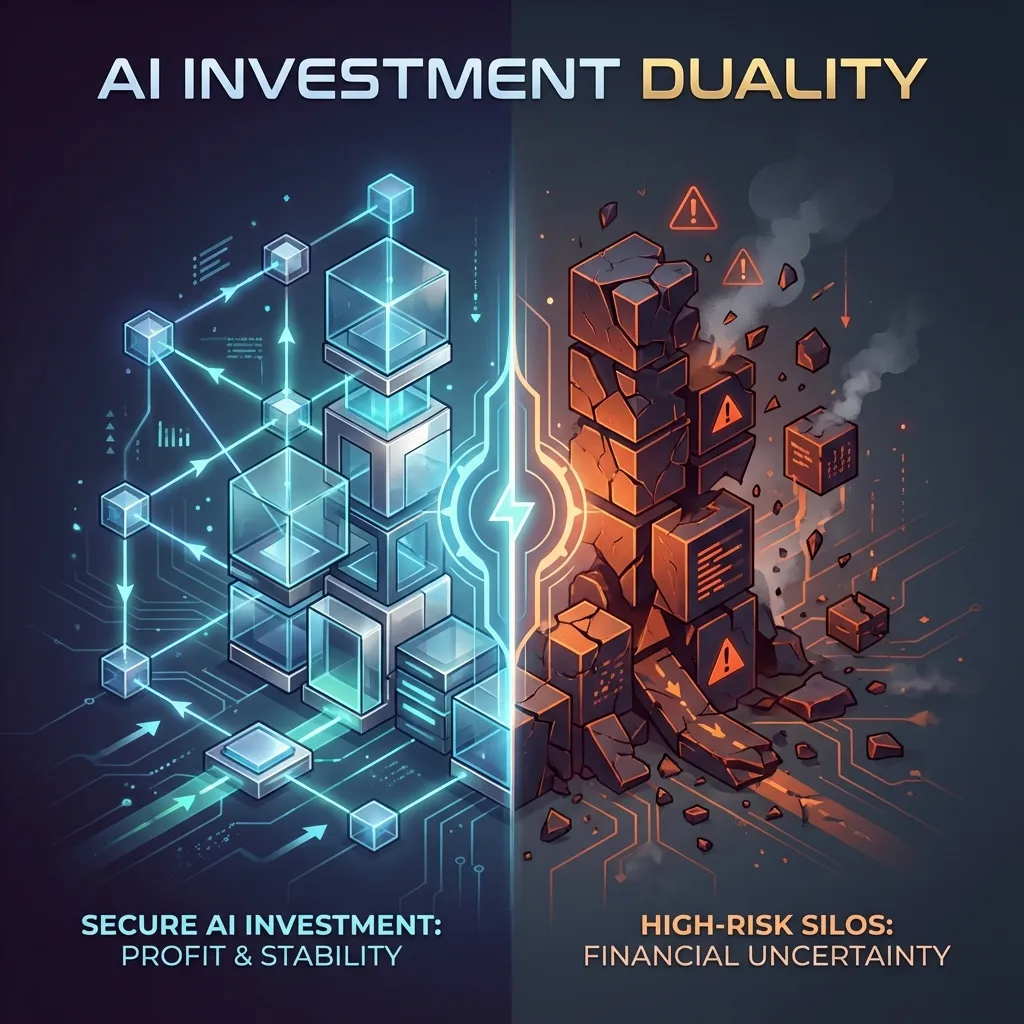

The promise of Artificial Intelligence is undeniable: efficiency, innovation, new markets. But for many industrial and technology directors, this promise is turning into a silent paradox: instead of leveraging profits, AI is draining them. The cost isn’t just in hardware and software; it hides in critical strategic planning gaps that compromise true digital transformation.
What Happened
While AI hype accelerates, a harsh reality emerges behind the data centers. Energy demand for these massive infrastructures is projected to skyrocket by 36% by 2035. This exponential growth collides with an alarming shortage of qualified engineers, competing with vital sectors like nuclear energy and defense. The result? Grid connection delays extending 8 to 10 years, forcing companies to invest in high-cost stopgap solutions. Furthermore, the environmental impact is increasingly visible: in 2023, air pollution generated by these centers cost $6 billion, with projections reaching $10-20 billion by 2030. These are not mere technical details; they are billion-dollar bottlenecks that turn investment into inefficiency.
The Alchemist’s Analysis
A fragmented view of AI implementation, where technology is seen as an isolated ‘agent,’ is a recipe for disaster. A single agent focused solely on deep learning or analytics does not address the systemic challenges that AI imposes. What we need is a ‘multi-agent’ approach, where AI strategy interconnects with talent management, energy infrastructure planning, sustainability, and governance. When thought of holistically, artificial intelligence acts as an organic system of interdependent agents, each optimizing its area (talent, energy, data) for a common goal: sustainable profit and real innovation, not just the acquisition of new software or a platform.
Impact on Operations
The failure to address these strategic dimensions will reverberate directly throughout the operation:
- Security: Precarious energy infrastructure and the shortage of qualified professionals create attack vectors and blind spots. How can valuable digital assets be protected if the physical foundation is fragile and the team is overworked or non-existent?
- Governance: The absence of an integrated AI plan results in isolated decisions, a lack of accountability, and an inability to manage environmental and regulatory risks. Who bears the cost of pollution? Who ensures compliance with renewable energy requirements?
- Orchestration: AI projects that do not consider the synergy between talent, infrastructure, and sustainability become islands of inefficiency. True orchestration requires a clear vision of how every piece—from the chip to the engineer, from electricity to environmental policy—fits together to maximize return and minimize risk.
Conclusion
The AI race is not just a technological marathon; it is a test of strategic resilience. Ignoring the pillars of talent, infrastructure, and sustainability is not a saving; it is a future debt. Centrato AI understands that sustainable profit from AI emerges from an alchemy between advanced technology and robust planning. Do not build your digital future on sandcastles.
Want to understand how your company can orchestrate an AI strategy that truly leverages profits instead of draining them? Subscribe to our newsletter and receive exclusive insights into the Centrato AI methodology for a future-proof AI implementation.