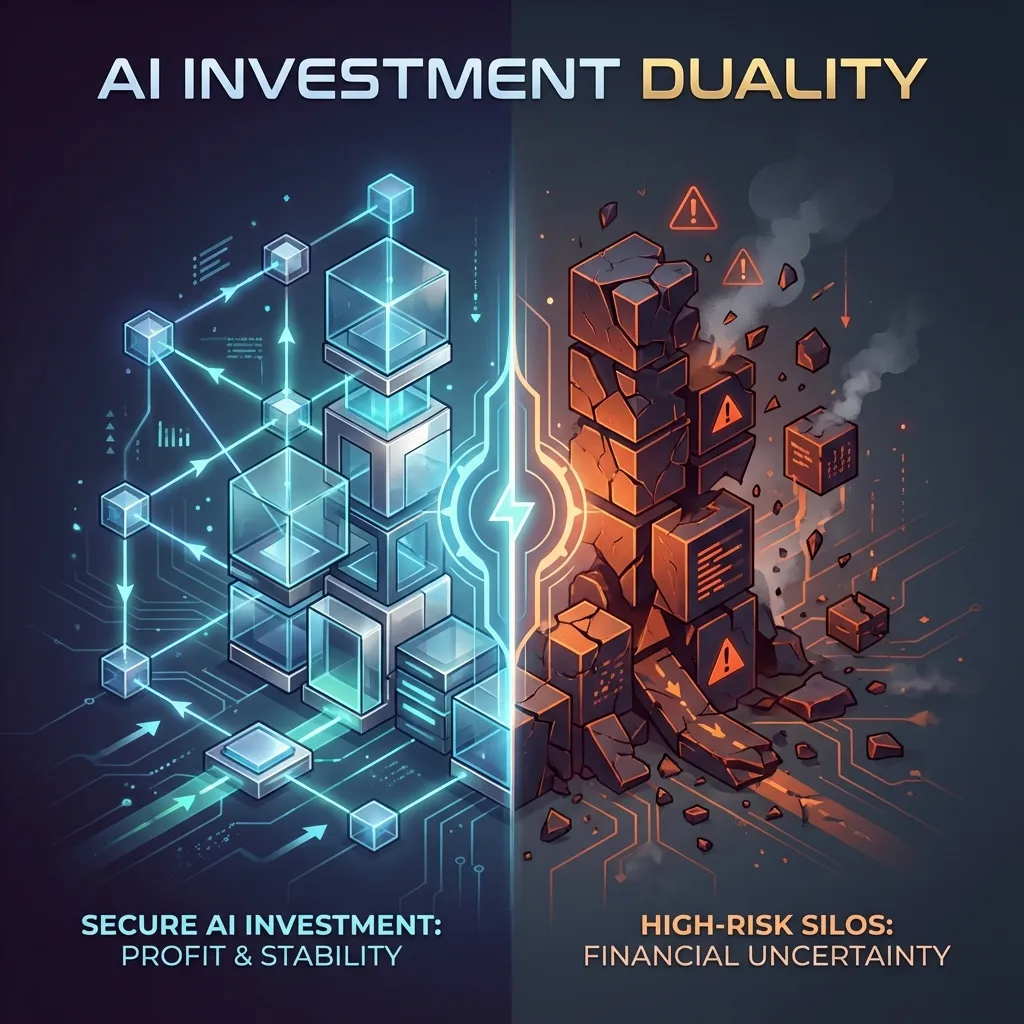

Artificial Intelligence, the engine of the next industrial revolution, carries an uncomfortable truth: its concentration of resources in developed countries may widen the gap between rich and poor nations. The recent United Nations alert is not a mere diplomatic statement; it is a clear signal of a strategic vulnerability that Brazilian industries need to address. Ignoring this trend means accepting a position of technological and operational dependence, with direct impacts on competitiveness and innovation capacity.
What Happened
The UN report details a scenario where computational power and financial resources for cutting-edge AI development are heavily centralized. About 80-90% of cloud computing resources for AI are in the hands of a few global players – mainly the United States, China, and the European Union. The cost to develop a large-scale generative AI model can easily reach billions of dollars, a prohibitive figure for the vast majority of developing countries, including Brazil.
This concentration is not limited to hardware or capital. It extends to access to quality data and robust digital infrastructure, creating an almost insurmountable barrier to entry. For Brazilian companies, this means facing competition from massively funded global solutions, often without the ability to develop local alternatives at the same scale or speed.
The Alchemist’s Analysis
In the current scenario, AI is not just a tool; it is a strategic resource. Dependence on foreign platforms and models, no matter how sophisticated, is the modern equivalent of delegating control of your production to a supply chain without visibility or control. A generic, global AI “agent,” disconnected from your local reality, is a limited tool. It fails to capture the cultural, regulatory, and market nuances that are crucial for innovation and competitiveness in a complex environment like Brazil.
For the Alchemist, the true power of AI lies in its adaptation and sovereignty. Global AI concentration is not a question of “who has the best AI,” but of “who controls the AI you use.” Accepting this dependence means giving up your digital autonomy. The challenge is not just to use AI, but to build AI, or at the very least, empower yourself to orchestrate and customize AI that resonates with your local operations and data. This requires investment in talent, infrastructure, and a strategic vision that goes beyond simply adopting off-the-shelf technologies.
Impact on Operations
AI concentration brings tangible risks and opportunities for operations in any Brazilian industry:
-
Operational Security and Resilience: Dependence on foreign AI infrastructure and models introduces points of failure and vulnerabilities. Issues of data privacy, cybersecurity, and regulatory compliance may be dictated by external jurisdictions, exposing your operations to unforeseen risks or regulations incompatible with local needs.
-
Governance and Ethics: Who defines the algorithms? What biases are embedded in the models? Lack of control over the development and implementation of global AI can compromise your company’s ethical principles and governance. Adopting AI without sovereignty means ceding part of your decision-making capacity and responsibility to third parties.
-
Orchestration and Local Innovation: Generic AI solutions may not be optimized for the specific challenges of your production chain, logistics, or Brazilian consumer behavior. The inability to customize and orchestrate AI with local data and specific know-how limits true innovation, creating fragmented and inefficient systems. The opportunity lies in developing your own orchestration layer that integrates the best of global AI with local intelligence and data, generating tailored value.
Conclusion
The UN alert on the AI divide is not a distant future; it is a reality already shaping the global competitive landscape. For industrial and technology directors, this is the time to go beyond mere adoption and question the origin, control, and adaptability of your AI strategies. Technological sovereignty and the ability to orchestrate AI solutions that meet your business’s specific needs are strategic imperatives, not luxuries. Companies that understand and act on this dynamic will not only survive but thrive in the AI era.
Explore our methodology at Centrato AI to navigate this scenario and build an AI strategy that ensures your autonomy and competitiveness in the globalized market.