
Artificial Intelligence (AI) is undoubtedly the engine of productivity and innovation for the next decade. However, a recent study by Agência Brasil, to be released in December 2025, brings an alarming figure that should resonate in every boardroom and factory floor in the country: Brazil faces a 4x digital abyss in AI access between its social classes. While 69% of Class A already incorporates these tools into their daily lives, only 16% of Classes D and E have the same access. For industrial and tech directors, this is not merely a social issue; it is a strategic bottleneck that threatens the competitiveness, innovation capacity, and long-term sustainability of any business.
What Happened
The numbers are brutal in their simplicity and implication. Nearly seven out of ten people at the top of the Brazilian socioeconomic pyramid are actively using AI, mastering its tools to optimize processes, accelerate analysis, and boost creativity. In contrast, at the base of the pyramid, only one and a half out of every ten people have that same opportunity.
In business terms, this translates to:
- Accelerated Competitive Advantage: Those who use AI produce faster, learn more efficiently, and, consequently, have greater potential for market valuation.
- Chronic Professional Disadvantage: Those left out lose access to an essential productivity multiplier, falling behind in an increasingly digitalized labor market.
- Confirmed but Concentrated ROI: Market reports, such as those showing 95% of Brazilian companies with a positive ROI in AI adoption, confirm the technology’s value. The problem is that this return is concentrated, deepening the concentration of wealth and opportunities.
This “digital capabilities gap,” as warned by the UN, is not a futuristic projection but a present Brazilian reality, shaping a scenario where productivity and innovation become privileges, not democratized tools.
The Alchemist’s Analysis
At Centrato AI, we view AI not as an isolated tool, but as a catalyst for systemic transformation. The view that AI can be a “single agent” of innovation, restricted to an R&D department or the strategic leadership, is naive at best. In fact, it is an “expensive toy” that masks a structural fragility.
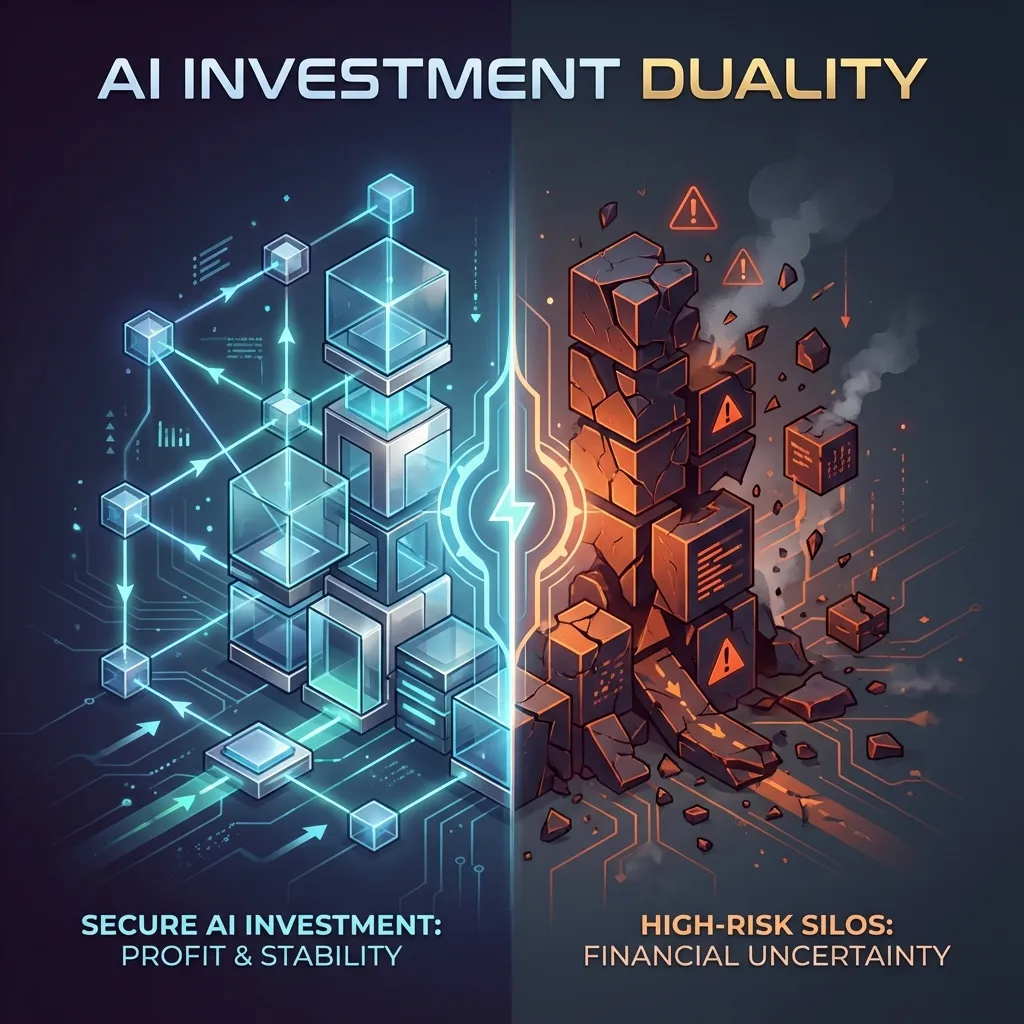
The true alchemy of AI happens when its intelligence is diffused, permeating all layers of an organization and even its ecosystem. When only an elite has access and proficiency, we create “intelligence silos” that, paradoxically, limit the disruptive potential of the technology itself. This generates:
- Centralized Dependency: The ability to innovate and execute is held hostage by a small group.
- Operational Risk: The company becomes vulnerable to disruptions or personnel changes within this restricted group.
- Loss of Opportunities: Grassroots innovations, daily micro-optimizations, and the identification of new uses for AI in routine operations simply do not happen.
For the industrial director, the question is not if to adopt AI, but how to ensure that this adoption creates a network of intelligent “agents” at all levels. The non-diffusion of AI is not just a failure of social inclusion; it is a strategic failure of scalability and resilience for your business.
Impact on Operations
Inequality in AI access has direct and serious implications for the operational health of any organization:
- Capped Productivity: Your company can invest in cutting-edge AI, but if the operational team at the base doesn’t know how to use it or doesn’t even have access, overall productivity will never reach its full potential. The “shop floor” (whether physical or digital) becomes a bottleneck, limiting the ROI of the AI investment.
- Fragile Governance and Limited Talent: How can you govern AI and its data if understanding and literacy regarding the technology are the privilege of a few? Furthermore, the search for talent becomes an even harder battle, as the base of the educational and professional pyramid—where many talents would emerge—is unprepared for the future of work.
- Unbalanced Orchestration: The orchestration of AI-based processes and systems requires distributed understanding. If decision-making and execution are disconnected in terms of AI proficiency, the company’s ability to adapt quickly, optimize workflows, and respond to market challenges is drastically reduced. The lack of broad training acts as a brake on operational agility.
- Risk of “Organizational Obsolescence”: An organization where AI is a privilege of the few runs the risk of creating an internal “digital underclass,” where a significant part of the workforce becomes less relevant or even obsolete, undermining the morale and adaptability of the company as a whole.
Conclusion
The 4x abyss in AI access in Brazil is a “pragmatic warning sign” for industrial and technology directors. It is not just a social statistic, but an “invisible strategic cost” that can undermine your company’s competitiveness, innovation, and resilience. Ignoring this disparity is like building a skyscraper on unstable foundations: AI may be the tip, but the base needs to be solid.
Centrato AI argues that the “democratization of AI” inside and outside corporate walls is not a luxury, but a strategic necessity. Companies that invest in comprehensive training, eliminate intelligence silos, and see AI as a catalyst for everyone on their team will be the true leaders of the future.
Are you ready to turn this challenge into an advantage? Understand how an AI strategy that permeates your entire operation can not only generate ROI but also build a more robust and equitable future for your company.
Want to go beyond superficial AI adoption and build a truly transformative strategy? Explore our methodology and discover how Centrato AI can help your organization navigate this new landscape, turning challenges into real opportunities. [Subscribe to our newsletter for exclusive insights on strategy and industrial AI.]