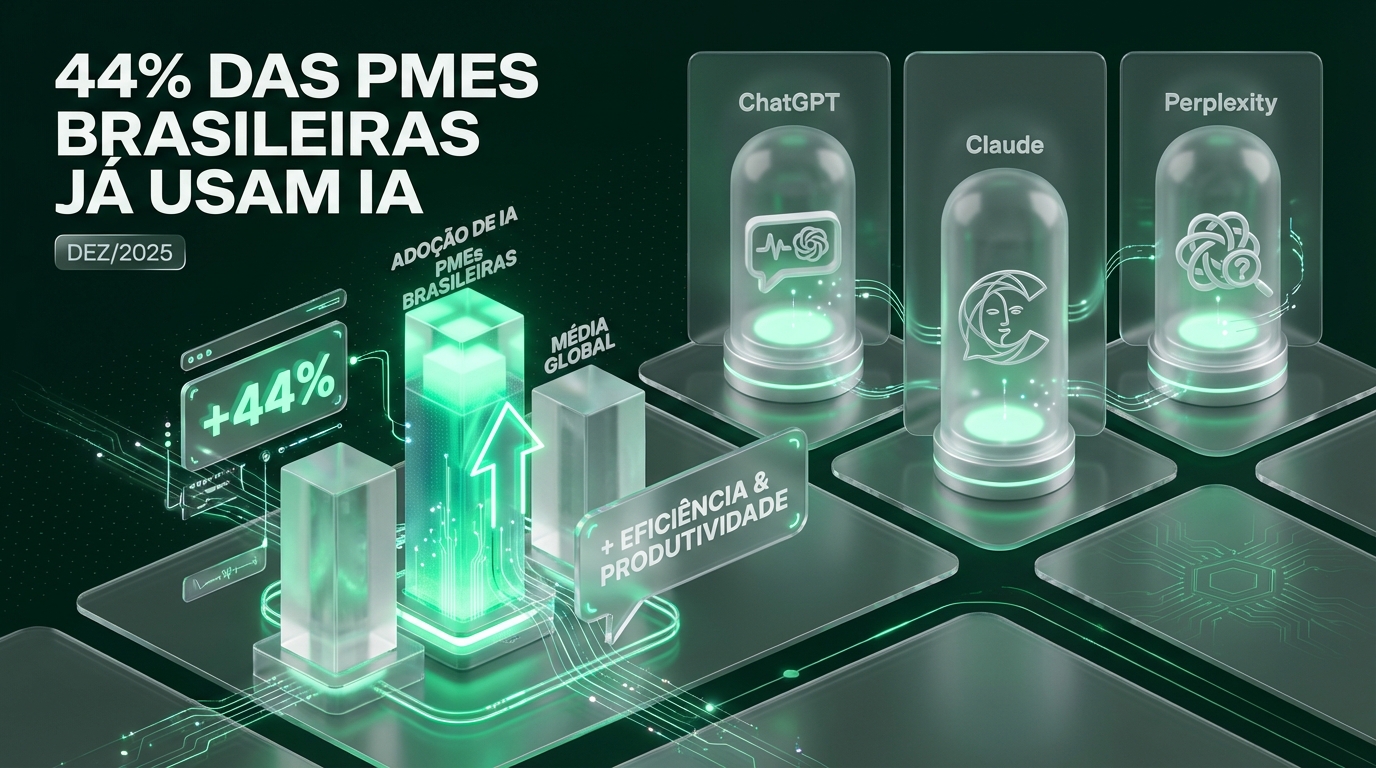

In the universe of digital transformation, few data points are as alarming as recent ones from Agência Brasil: 69% of Class A in the country already uses some AI solution, compared to a mere 16% of Classes D and E. This is not just a social statistic; it is a mirror reflecting the true state of artificial intelligence adoption in the Brazilian economy. For an industrial director or tech leader, this “digital divide” in a new guise should not be ignored. It points to a real risk of building an innovation strategy on a fragile foundation, creating a “facade AI” that promises much but delivers little systemic value.
What Happened
The Agência Brasil report, corroborated by research from Cetic.br, reveals that access to minimum infrastructure (stable broadband, modern devices) and digital literacy remain insurmountable barriers for most of the population. The scenario is complex: while executives and high-income professionals incorporate AI to optimize workflows, generate content, and analyze data, the vast majority of the workforce—and consumers—lacks the basic conditions to even interact with these tools.
The ripple effect is evident: higher-income and more educated workers consolidate a productive advantage, while the base remains in manual, repetitive tasks with low technological leverage. For industry, this translates into an artificially restricted consumer market for AI solutions and, more seriously, an internal workforce operating at unequal speeds and capacities. Ignoring this reality is neglecting an operational bottleneck that arises, ironically, from the very pursuit of efficiency.
The Alchemist’s Analysis
At Centrato AI, we understand that the true alchemy of AI lies not in isolated tools in the hands of a few, but in its ability to transform processes and raise productivity at all levels of an organization. What this news reveals is the danger of “single-agent AI”: the idea that productivity driven by artificial intelligence can be sustained by an elite of advanced users, while the bulk of the operation remains analog.
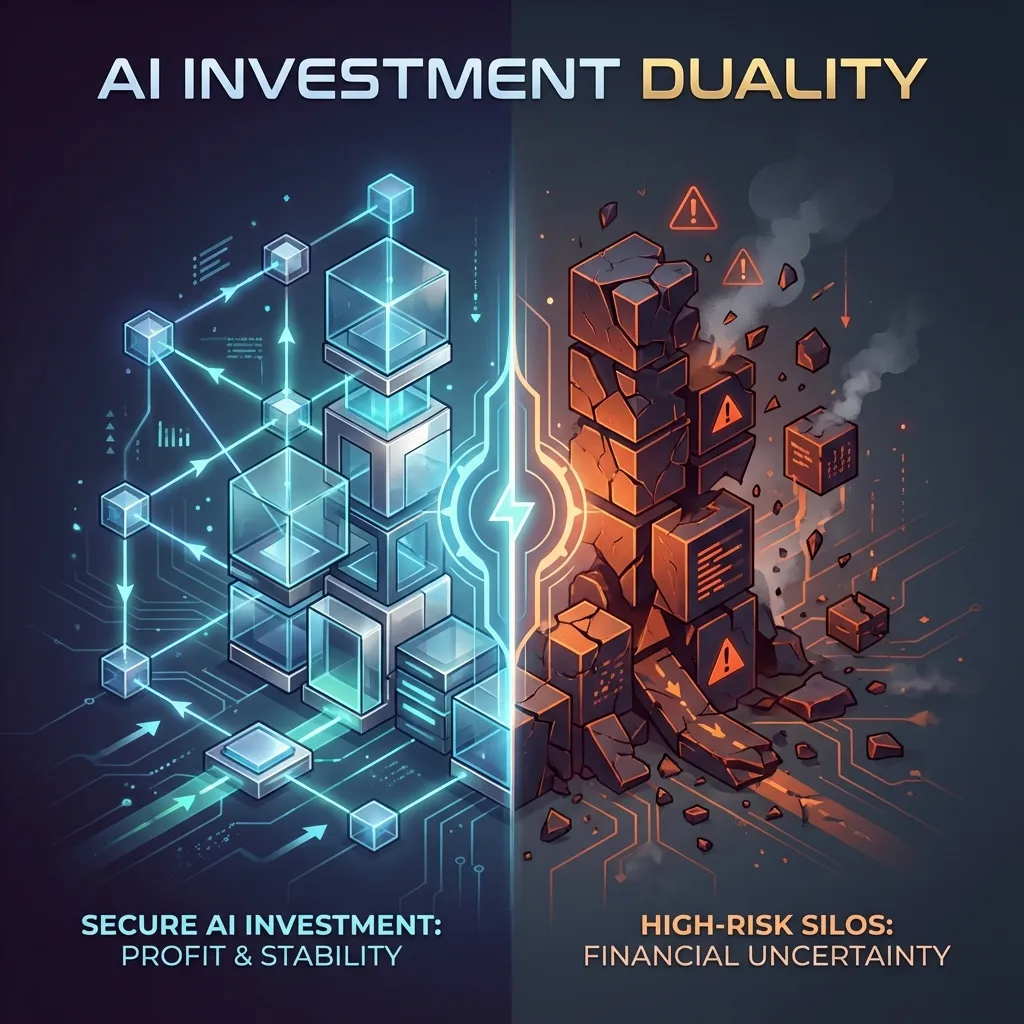
This is a costly fallacy. Buying licenses and implementing AI systems for “the top of the pyramid” creates a “digital makeshift.” This add-on may be modern and efficient, but it rests on a foundation that still operates with 1990s processes. The result? The efficiency gain at the top is systematically swallowed by the bottleneck at the base. Digital transformation becomes superficial—a technological storefront without depth—and the real ROI of AI remains a chimera. Innovation that doesn’t scale to those who execute is, in the end, just technical vanity.
Impact on Operations
This inequality in AI access and literacy manifests in concrete and harmful ways for industrial operations:
- Fragmented Data Security: If only a fraction of your team understands and properly uses AI tools, who guarantees the consistency and security of data generated or processed by the majority still operating manually? The lack of standardization in AI use increases the risk of “shadow IT,” inconsistent data entry, and security vulnerabilities, eroding the integrity of your most valuable asset.
- AI Governance: An Ivory Tower Strategy: How can effective AI governance, ethical use policies, and regulatory compliance be implemented when understanding and adoption are so unequal? Strategic decisions made at the top level encounter resistance or misunderstanding at the base, resulting in compliance gaps, operational inconsistencies, and an AI strategy that exists only on paper, not in daily practice.
- Orchestration and the Base Bottleneck: The promise of AI is to orchestrate workflows, eliminate friction, and accelerate productivity. But if only your “elite agents” operate with AI, the overall speed of your operation will continue to be dictated by the slowest link. The “super-productive elite” may even reach efficiency peaks, but they cannot move the entire machine alone. The lack of horizontal AI integration creates productivity silos, frustration, and a deficient ROI across the entire value chain.
Conclusion
Inequality in AI access in Brazil is not just a social issue; it is a strategic warning for any leader seeking tangible results with technology. For Centrato AI, democratizing AI within an organization is not an act of charity, but a pragmatic necessity to unlock real value, avoid hidden bottlenecks, and ensure that the promise of productivity is fulfilled at all levels. Is your AI strategy today reducing operational bottlenecks or just automating privileges?
It’s time to reassess. Centrato AI has the methodology to help your company transform this reality, ensuring that artificial intelligence is, in fact, a leverage tool for everyone, not just for some. Talk to us and find out how.