For decades, the narrative of technological innovation has been dominated by the traditional poles of the Global North. It was assumed that digital progress flowed from established centers to the rest of the world. However, a recent OECD survey not only challenges this premise but completely reverses it. We are on the verge of a fundamental redefinition of where and how artificial intelligence is truly taking root and developing.
What Happened
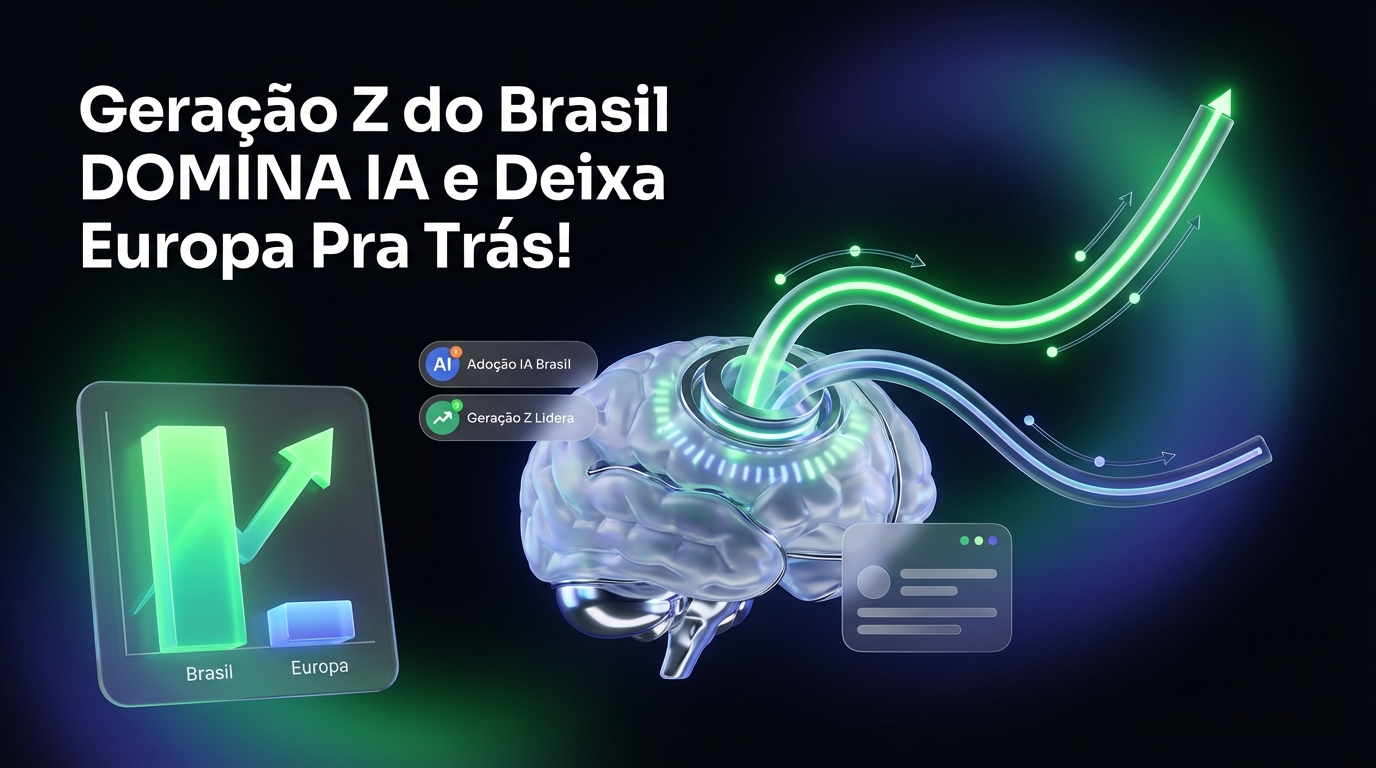
The Organisation for Economic Co-operation and Development (OECD) has just released data that marks a turning point. Young people in the emerging economies of the Global South, notably Brazil, Mexico, and Asian countries, are embracing AI technologies at significantly higher percentages than their European counterparts. This is not a mere deviation but a dramatic reversal of the narrative that for a long time associated technological vanguard with the Old Continent and North America. The research indicates organic adoption, driven by robust internal demand and an inherent curiosity of new generations.
The Alchemist’s Analysis
The mere possession of technology has never been synonymous with innovation or competitive advantage. The true alchemy lies in the capacity to absorb and transform this technology into real value. What the OECD data reveals is not just a statistic, but an evolving cultural paradigm. While in mature markets AI adoption may be more cautious, regulated, and sometimes driven top-down by large corporations, in the Global South – and notably in Brazil – it is a bottom-up phenomenon. It is a Gen Z that doesn’t wait for guidelines but integrates AI into their daily lives and work fluidly, as a natural extension of their digital tools. This creates fertile ground for innovation that is organic, resilient, and adapted to local complexities. It’s the difference between a laboratory studying a molecule and an organism incorporating it and making it work in the real ecosystem. This is the true technological “leap”: not just adopting, but internalizing and reshaping technology based on local needs and ambitions, paving the way for genuine digital sovereignty.
Impact on Operations
For the Industrial Director or Technology Leader, the implications of this change are profound and demand an immediate strategic re-evaluation.
- Talent and Workforce: The emergence of a young workforce, intrinsically familiar and skilled with AI, means a drastically reduced learning curve for implementing new solutions. Investing in local talent is not just a matter of cost, but of access to innate proficiency.
- Demand and Product Development: The Brazilian market is no longer just a passive consumer. There is an organic and sophisticated demand for AI solutions that address local peculiarities and challenges. This opens a window of opportunity for focused R&D, with export potential to other emerging economies with similar usage dynamics.
- Implementation Agility: With a user base already accustomed to AI, internal resistance to change may be lower, accelerating implementation cycles and optimization of industrial processes, from predictive maintenance to supply chain optimization.
- Sovereignty and Local Innovation: It strengthens the argument for investments in infrastructure and data centers in the country, creating an ecosystem that not only consumes but produces cutting-edge technology, solidifying an intrinsic competitive advantage in the global AI landscape.
Conclusion
The OECD research is both a warning and an invitation. It’s a warning against outdated perceptions and an invitation to recognize Brazil and the Global South as vibrant centers of AI innovation and adoption. Ignoring this reality is to underestimate the human capital and market potential that are already in full effervescence. To thrive in this new scenario, industrial and technology leaders must align with this wave, investing in local talent, developing adapted solutions, and embracing the agility that this new generation already masters.
Want to delve deeper into strategies to leverage AI in your organization and transform this data into a competitive advantage? Subscribe to our newsletter and receive exclusive analyses and practical insights directly from Centrato AI.